

Many clinically significant challenges remain unresolved not because solutions are unknown, but because they lack a structured path to development. Afeka – The Academic College of Engineering in Tel Aviv was selected to participate in the competitive “Science Accelerators” (Ma’itzei Mada) program, supported by the Israeli Ministry of Science. Conducted in partnership with Meir Medical Center, the initiative brings together engineers, clinicians, and researchers to address real-world medical challenges through structured collaboration.
FORFIX – Intraocular Lens Fixation Device
Cataract surgery is among the most common procedures worldwide, yet in certain cases, intraocular lens dislocation requires complex corrective intervention. FORFIX is a patent-pending microsurgical device designed to stabilize the lens, reduce procedural complexity, and improve surgical outcomes. The solution is compatible with existing techniques and aims to enhance both safety and accessibility.
Thermal Diagnostics: Seeing the "Invisible" Signs of Arthritis
- Early identification of inflammatory conditions remains a clinical challenge, often requiring complex or costly diagnostic tools. This project uses thermal imaging combined with algorithmic analysis to detect patterns associated with inflammation. The system is designed to support earlier, non-invasive assessment and improve accessibility to diagnostic evaluation.
Doppler-Guided Epidural Placement
Epidural catheter placement is a common but technically sensitive procedure, where inaccurate positioning may lead to complications and patient discomfort.
This project develops a Doppler-based ultrasound guidance approach to support real-time monitoring of catheter placement and fluid delivery. By improving precision during insertion, the system aims to enhance procedural accuracy and reduce associated risks.
AI for IVF: Optimizing Embryo Transfer
Despite advances in assisted reproduction, IVF success rates remain relatively low, with embryo transfer timing as a key variable. This project applies imaging analysis and clinical data to support more precise decision-making in embryo selection and transfer timing. A proof-of-concept study has been completed, and development of a patient-facing application is underway.

From the lab to clinical impact
The “Science Accelerators” program reflects Afeka’s strength in applied engineering and its ability to translate academic knowledge into real-world medical solutions. Through close collaboration with Meir Medical Center, Afeka’s faculty and researchers have developed projects that address complex clinical challenges with precision, creativity, and practical relevance.
The patents, methodologies, and technologies emerging from this work demonstrate not only the depth of expertise within Afeka, but also the value of sustained collaboration between engineering and medicine. As these initiatives continue to advance, they underscore the role of interdisciplinary innovation in improving patient care and responding to evolving healthcare needs.


The Center’s Equipment
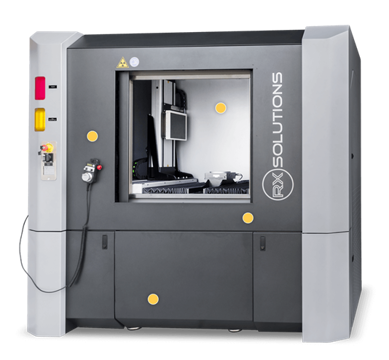
The micro-CT (computerized tomography) device is a powerful tool for gaining in-depth insights into manufacturing process failures and conducting novel research. This device enhances the academic knowledge and R&D capabilities available to the industry.
Uses of the Device:
- 3D scanning of all parts of a product, both external and internal, generating an STL model.
- Non-destructive tests (NDTs) to assess the product’s integrity and quality, detecting hidden flaws.
- Comparing the product’s dimensions against the planning (CAD) file to ensure the design matches the actual product.
Up to 1,000x magnification, includes a bright field (BF), dark field (DF), polarization, entering and reflected light, and image processing and measuring software.
With the most advanced software package (Oxford advanced).
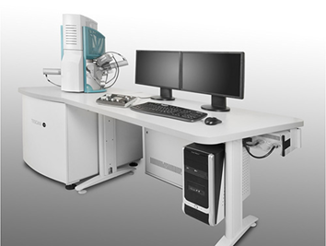
With a large chamber (holds models of up to 230mm) and 4 detectors.
Collaborations


Center Director
Dr. Oz Golan
Head of the materials engineering specialization at Afeka’s School of Mechanical Engineering

Dr. Oz Golan
Head of the materials engineering specialization at Afeka’s School of Mechanical Engineering
Dr. Golan is an expert in materials engineering, a researcher, and a lecturer with extensive experience in adapting materials for performance and investigating material failures in production and development processes He currently leads the materials engineering sector at the Association of Engineers in Israel.
Engineering the Future of Care
Share a link using:
https://external.afeka.ac.il/en/industry-relations/research-centers/engineering-the-future-of-care/WhatsApp
Facebook
Twitter
Email
https://external.afeka.ac.il/en/industry-relations/research-centers/engineering-the-future-of-care/